Making space for curiosity, choice, and possibility.
How much of what we consider permanent is actually open to change?
Architecture gives physical form to boundaries. Walls establish limits, openings create connections, and the relationship between solid mass and empty space influences how we experience our surroundings.
But boundaries can also be psychological. Some provide stability and protection. Others quietly define what we believe is possible.
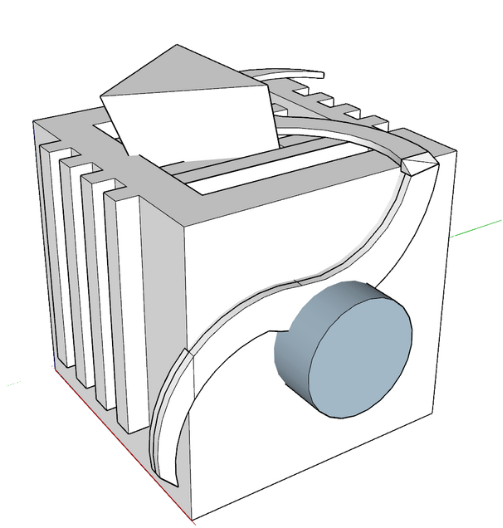
Choosing Me explores that relationship through an abstract architectural composition—one that considers what should remain, what can be released, and what might emerge when we create space for change.
Structure and the Freedom to Change
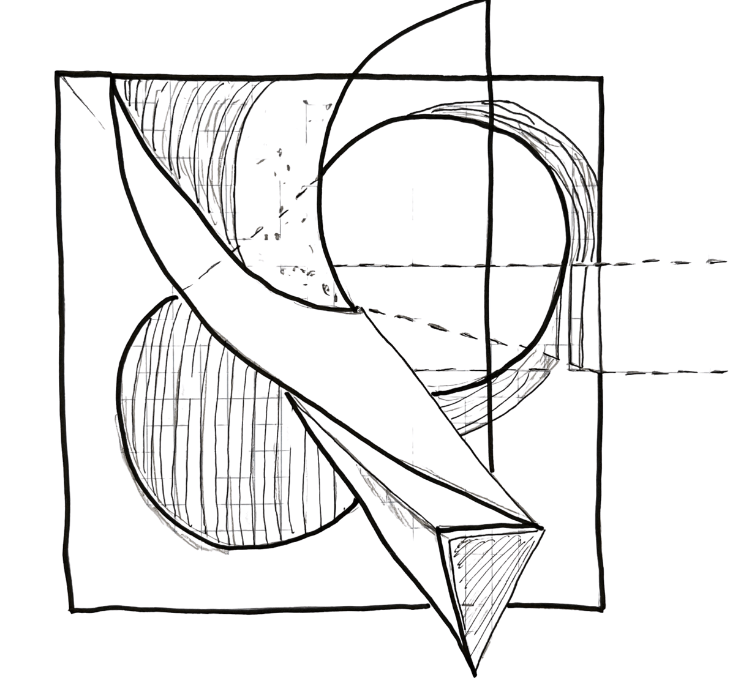
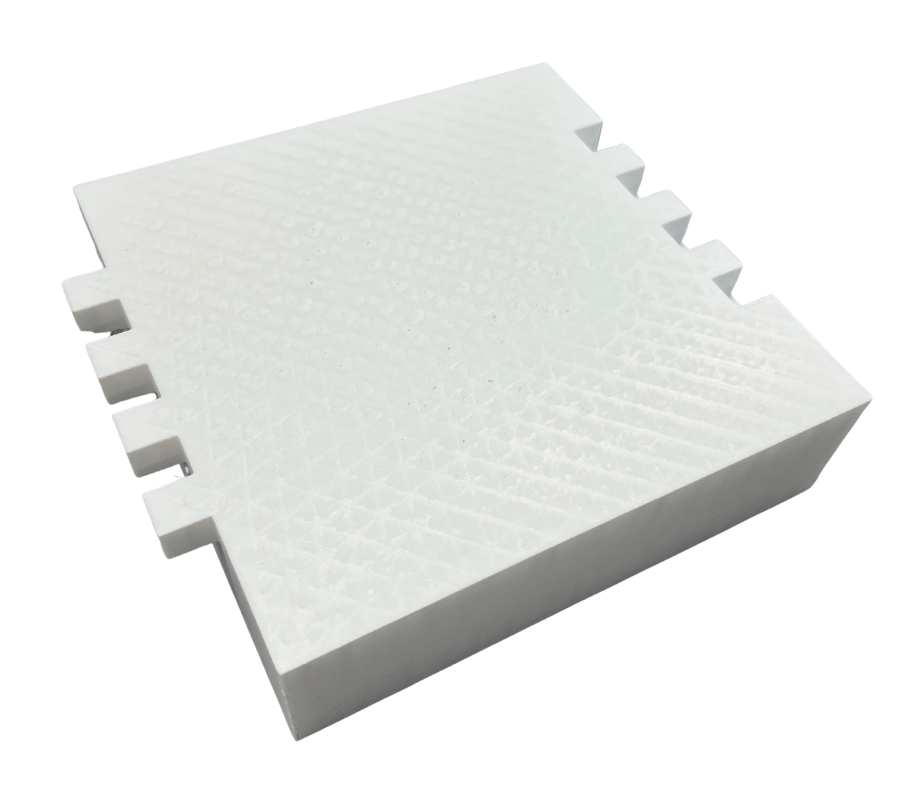
The composition is organized around a substantial rectilinear form, developed from an original ten-inch square.
Its geometry establishes order and stability. Yet that order is continually challenged by forms that penetrate, rise from, move across, and extend beyond its boundaries.
The solid foundation represents what holds: history, values, relationships, and accumulated experience.
There is a tendency to associate personal transformation with starting over. But meaningful change doesn’t necessarily require abandoning what came before. Sometimes it requires understanding which elements provide the foundation for what comes next.
What remains is by design.
Claiming Space
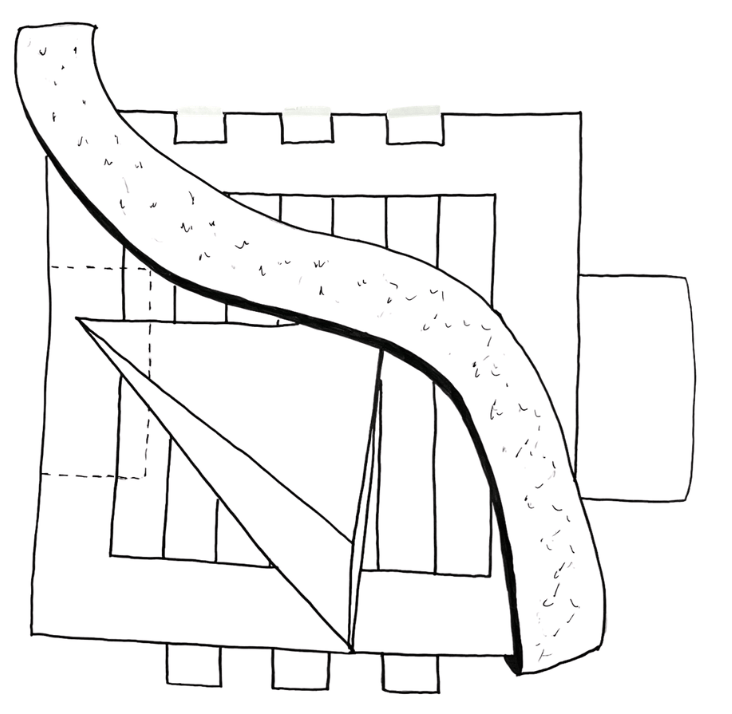
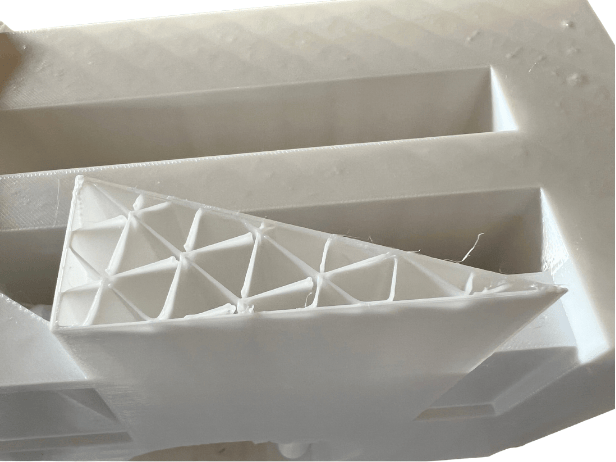
A triangular form rises dramatically from the composition.
Its geometry suggests an upward pulling motion, as though something has been grasped from within the mass and drawn into view.
It is an expression of intention and agency—of allowing something already present to occupy space.
Part of the triangle’s internal framework remains exposed. This deliberate articulation reveals the structure underneath, contrasting the finished exterior with the framework that supports it.
What is visible is only part of what gives something strength.
Breaking Through
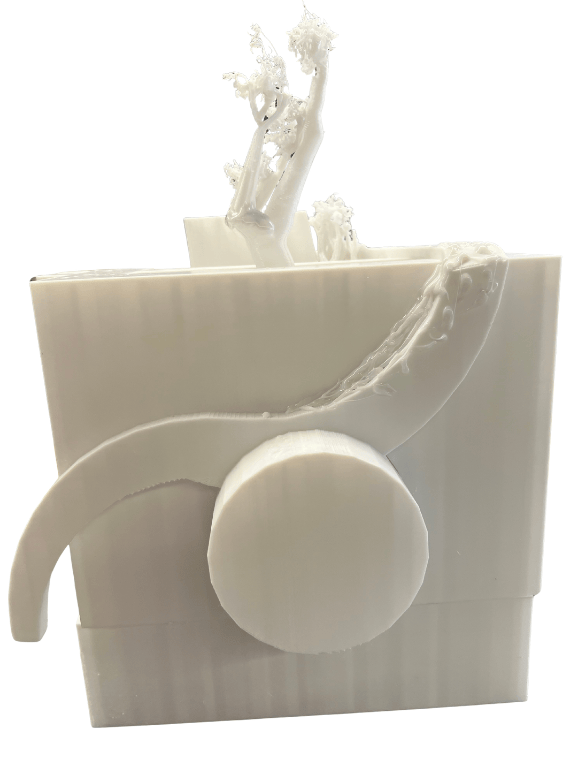
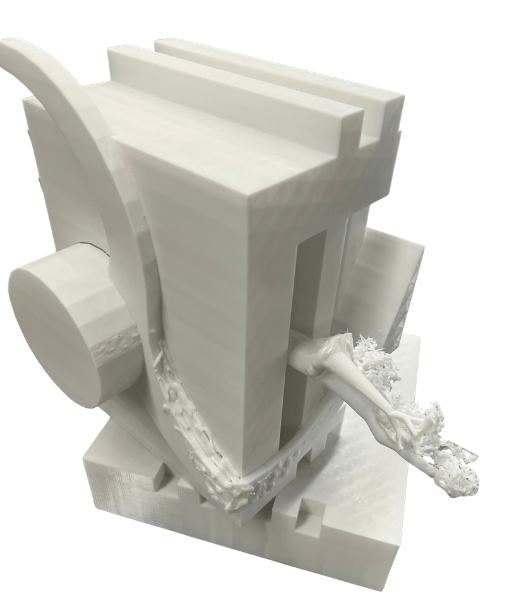
A cylindrical form projects outward through the rectilinear enclosure.
Its circular geometry contrasts with the surrounding angular structure, while the opening introduces negative space into an otherwise solid boundary.
The gesture is forceful, almost like a fist pushing through a wall.
Some boundaries are necessary. Others eventually need to be challenged.
The distinction is knowing which is which.
Curiosity Without Force
Not every element of the composition demands attention through strength or interruption.
A curving ribbon moves across the structure, following a path that feels almost effortless. Its organic movement contrasts with the rigid geometry beneath it.
Unlike the triangle or cylinder, it doesn’t appear to struggle against its surroundings.
It simply follows its own direction.
Curiosity has a different kind of energy. It doesn’t always require a destination, a justification, or even a clear purpose. Sometimes the freedom to explore is reason enough.
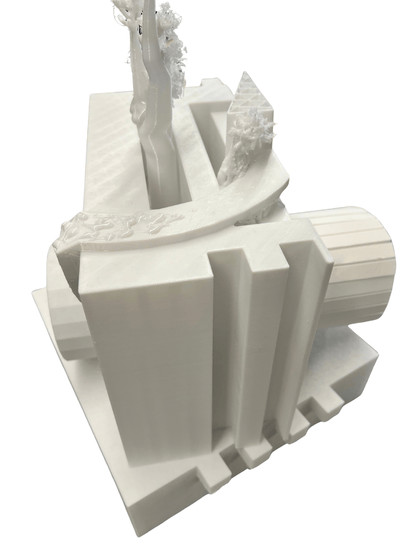
Repeated vertical planes introduce another kind of movement: rhythm. Their alternating solids and voids suggest expansion, retreat, and progression.
Not all movement is dramatic. Not all progress is linear.
The Evidence of Experience
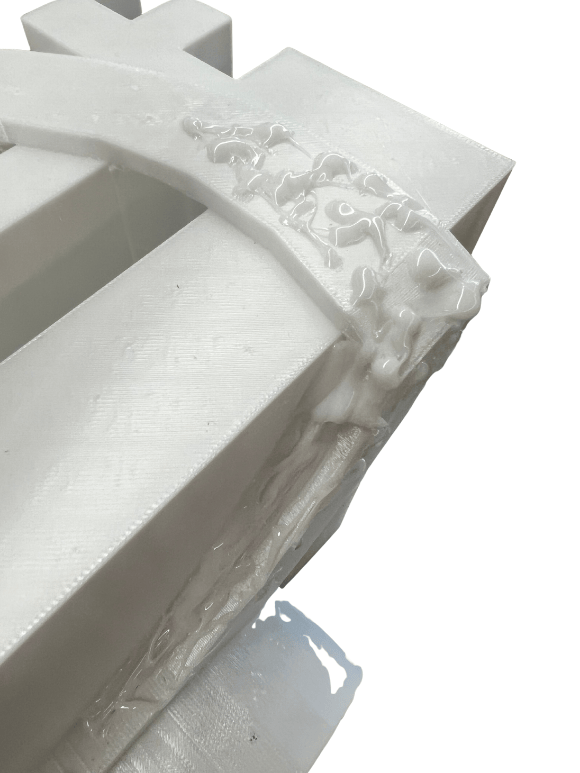
The composition intentionally contrasts smooth geometric surfaces with irregular handmade texture.
The marks interrupt the precision of the printed forms, introducing variation and evidence of the human hand.
In design, texture can communicate age, memory, use, and character. Materials become more interesting when they reveal something about their history.
The same can be said of people.
Experience leaves its marks. Those marks need not be concealed to preserve the integrity of the whole.
They can become part of what makes it meaningful.
Making Room for Growth
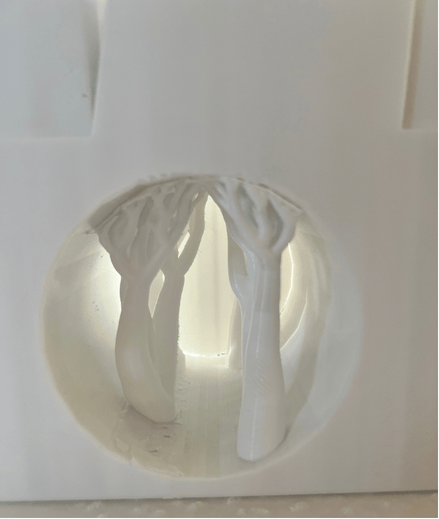
One of the more unusual features of the composition is its tree-like forms.
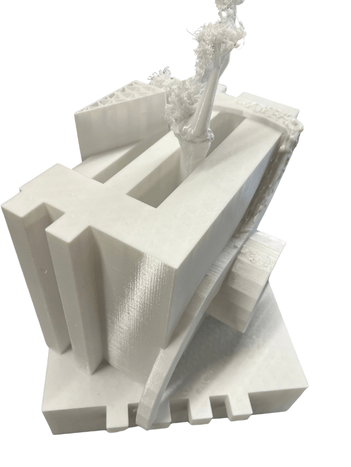
These originated as supports during the 3D-printing process. Rather than removing them entirely, I chose to preserve and develop their organic character.
They extend through openings in the geometric structure, introducing an unexpected relationship between manufactured form and natural growth.
The contrast is intentional.
Where the triangle pulls and the cylinder pushes, the trees simply grow.
Growth doesn’t always require force. Sometimes the most important thing we can do is create the conditions that allow it to happen.
The Possibility of Rearrangement
The physical composition consists of three major sections that remain separate rather than permanently joined.
This allows their relationship to be reconsidered.
In architectural design, the arrangement of elements determines how we experience space. Changing their relationship can alter the entire composition without changing the individual elements themselves.
That principle carries meaning beyond architecture.
We don’t always need different pieces. Sometimes we need the freedom to arrange the pieces we already have in a different way.
The ability to pause, reconsider, and choose remains part of the design.
By Design
The ideas explored in Choosing Me also connect to my song, By Design, which considers the relationship between identity, experience, and making room for one’s own voice.
Both works share a central thought: change and continuity are not opposites.
The rigid forms represent what has been established. The organic forms represent what is still becoming.
Some things are pulled into existence. Some boundaries must be broken. Some paths are followed simply out of curiosity. And when space is created, some things simply grow.
For me, this is one of the most compelling possibilities of design.
It can communicate far more than appearance or function. Through form, material,